French bureaucracy that makes sense!
Ah, the open road. Sunshine, croissants, a full tank of diesel, and the glorious freedom of the French autoroute. What could possibly go wrong?
Well, let us tell you.
There we were, happily trundling along the A20 in our beloved motorhome, when out of nowhere — WHAM! A side door from someone else’s horsebox came flying off and tried to join our party. Apparently, it fancied a new career as a surprise bonnet ornament.
Thankfully, everyone’s okay — us, the horsebox driver (somewhere up ahead, now with 50% fewer doors), but the motorhome now has a nasty bruise that will need TLC on our arrival home.
So what do you do in this situation? Apart from say a few words your mother wouldn’t approve of and channel your inner Google Translate ninja? You grab something called the
European Accident Statement. I’d never heard of it before! It’s brilliant. If you have it. Top tip: Some drivers carry this form in their glovebox. Others (hello!) carry half a pack of mints, a pen that doesn’t work, and absolutely no idea what to do next. Learn from us.
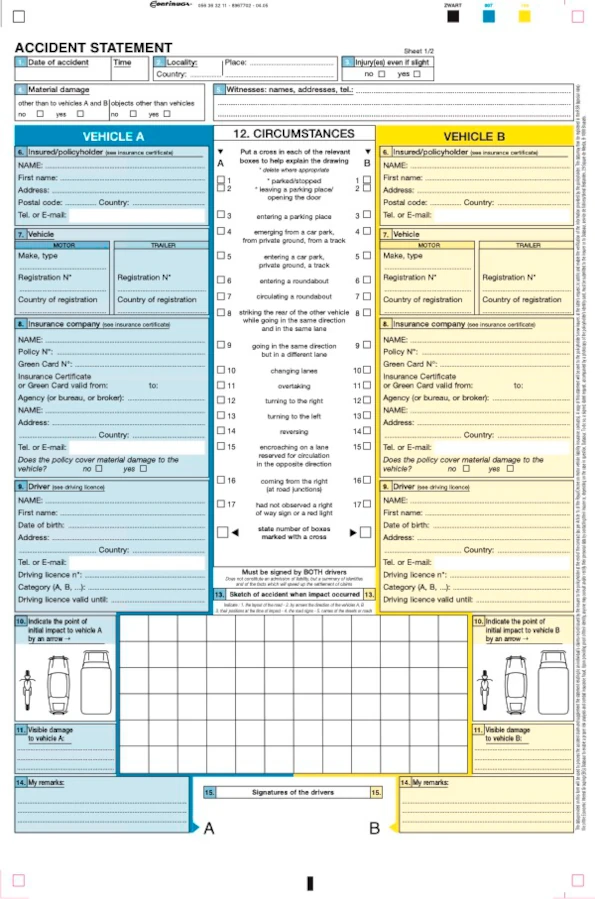
Moral of the story? Always expect the unexpected, and maybe keep a European Accident Statement tucked somewhere between the maps and the emergency snacks. They are available on line and are in most European languages.
So here’s how it works when random flying vehicle parts get involved:
- Pull over safely – Hazards on, warning triangle out, pretend you’ve totally got this under control.
- Hi viz on (these are a legal requirement in France) but quelle surprise French drivers don’t appear to carry them.
- Check everyone’s okay – Yourself, your passengers, your motorhome, your nerves.
- Take photos – Of the damage, the scene, the offending door (if it hasn’t legged it into a field).
- Exchange details – With the other driver, using this newly discovered form.